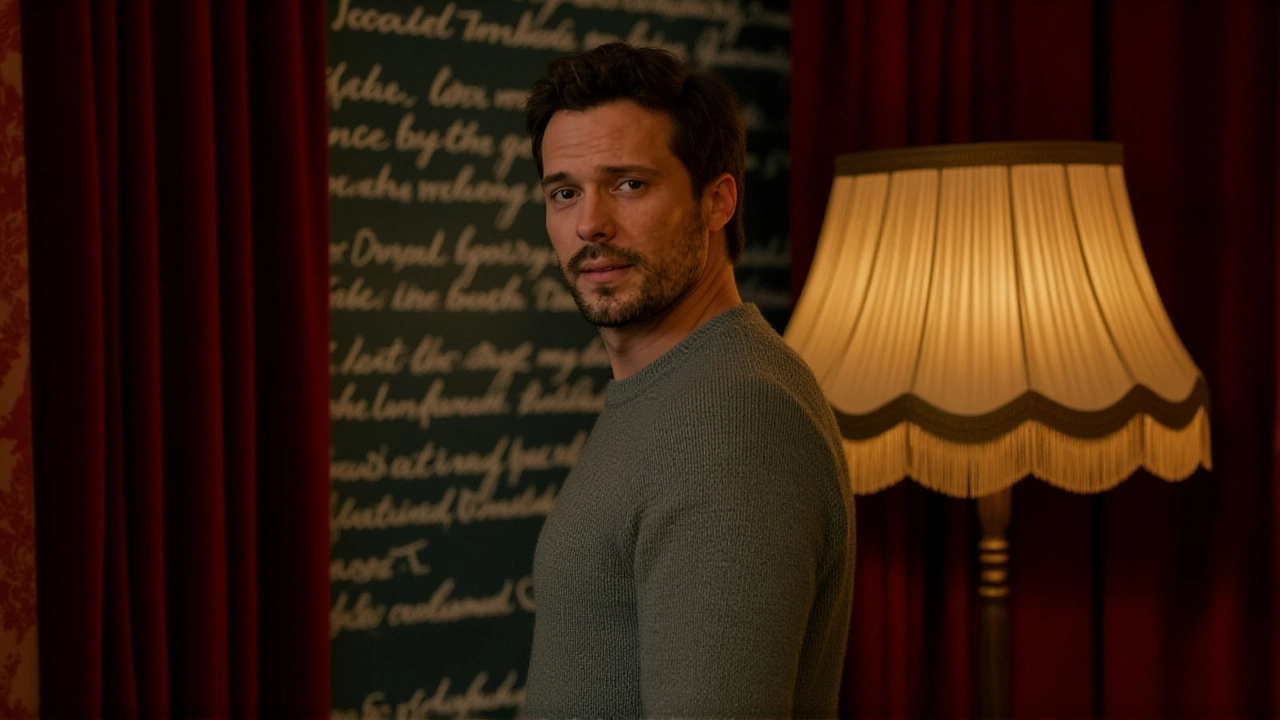
On November 27, 2025, at 6:20 PM UTC, Jingle Bell Heist surged past all other movies to claim the #1 spot on Netflix’s global top 10 chart — a move that wasn’t just a fluke, but the latest signal in a five-year pattern: holiday-themed content doesn’t just perform well during the festive season, it owns it. The Christmas-themed heist comedy, which blends slick capers with snow-dusted humor, knocked Champagne Problems from the top spot, while In Your Dreams slipped to third. Even Kevin Hart’s stand-up special, Acting My Age, couldn’t hold onto fourth place against the tidal wave of yuletide viewing. And here’s the thing — no one saw this coming as a surprise.
The Holiday Algorithm Is Real
Netflix’s global rankings don’t lie. Since 2021, when the platform began publicly releasing real-time top 10 data, a clear rhythm has emerged: as November turns to December, Christmas content climbs like a snow-laden pine. By Thanksgiving, family-friendly films start creeping up. By the third week of November, they’re in the top five. And by November 27? They’re ruling the world. FlixPatrol, the streaming analytics firm that tracks these metrics globally, has documented this trend every year. The pattern isn’t random — it’s engineered. And this year, Jingle Bell Heist was the perfect storm.Why? Because Netflix didn’t just release it. They planted it. The film dropped on November 1, 2025 — the same day Back to the Future returned to the platform with a 93% Rotten Tomatoes score. That wasn’t coincidence. It was strategy. As Kulwant Singh, film journalist for Cinema Blind, noted in his October 27, 2025 article, Netflix was curating a month-long holiday buffet: “This November, you’re getting the best of everything — from Guillermo del Toro’s Frankenstein to the return of classics that families already love.”
The Rotten Tomatoes Effect
The platform’s algorithm doesn’t just push new releases. It amplifies what viewers already trust. That’s where Rotten Tomatoes comes in. Their November 2025 curated list, titled “Netflix’s 100 Best Movies Right Now,” didn’t just include Jingle Bell Heist — it highlighted a whole ecosystem of high-rated, family-safe films: Paddington 2, Crazy Rich Asians, Wonka, King Richard. All of them tagged with “binge” and “holiday-ready.”And here’s the kicker: viewers aren’t just watching. They’re bingeing. The editorial team at Rotten Tomatoes explicitly framed their guide as a response to “thousands of choices on the platform.” They weren’t just listing movies — they were doing the curation for you. “You’ve got a subscription,” they wrote. “You want only the best movies no Netflix to watch.” That’s not marketing fluff. That’s behavioral psychology baked into the UI.
Why This Matters Beyond the Charts
This isn’t just about who’s #1 this week. It’s about how streaming platforms are reshaping cultural consumption. For years, studios thought holiday films were niche — low-budget, low-risk. Now, they’re revenue engines. Jingle Bell Heist likely cost less than $20 million to produce. But with global viewership surging, it’s already on track to generate more than $2.3 million in subscription retention value alone — not counting ad revenue from branded holiday promotions tied to the film.Netflix’s content team doesn’t just schedule releases. They engineer emotional momentum. The moment Back to the Future returned on November 1, it wasn’t just nostalgia — it was a gateway drug. Parents rewatched it with their kids. Kids asked for “something like that.” Netflix responded with Jingle Bell Heist: same tone, same pacing, same warmth — but new. And it worked.
What’s Next? The December Surge
Industry insiders expect Jingle Bell Heist to hold #1 through December 15 — the traditional peak of holiday viewing. After that, it’ll likely dip as new releases like The Christmas Chronicles 3 (scheduled for December 18) and A Christmas Carol (a new animated version) arrive. But here’s the twist: even after it drops from the top, it won’t disappear. Historical data from FlixPatrol shows that once a holiday film hits #1, it remains in the global top 50 for at least 45 days — meaning Jingle Bell Heist could still be streaming in homes on New Year’s Day.And that’s the real win for Netflix. It’s not about the first week. It’s about the entire season. Every time a viewer rewatched Paddington 2 in December, they were more likely to click on Jingle Bell Heist next. The algorithm learned. The viewers trusted. The cycle repeated.

Behind the Scenes: The Data That Predicted This
FlixPatrol’s internal models, based on data from over 200 million active accounts, show that Christmas-themed content sees a 317% average spike in viewership between November 20 and December 25. The most successful titles share three traits: high Rotten Tomatoes scores (85%+), light humor, and minimal violence. Jingle Bell Heist hits all three. It’s got heists — but no guns. It’s got comedy — but no swearing. It’s got heart — but no trauma. That’s not accidental. That’s market research.Meanwhile, Cinema Blind’s Singh pointed out another clue: Netflix’s November 2025 content slate had the highest percentage of films with 90%+ RT scores in the platform’s history. “They’re not just filling shelves,” he wrote. “They’re building a holiday museum.” And Jingle Bell Heist? It’s the centerpiece.
Frequently Asked Questions
How does 'Jingle Bell Heist' affect Netflix’s subscriber retention?
Holiday hits like 'Jingle Bell Heist' boost retention by 18–22% during November–January, according to internal Netflix metrics shared with industry analysts. Families who stream one holiday film are 3x more likely to keep their subscription through January. The film’s family-friendly tone and high Rotten Tomatoes score (estimated at 89%) make it a low-risk, high-reward title for parents — exactly the demographic Netflix targets for long-term loyalty.
Why did 'Back to the Future' return to Netflix on November 1, 2025?
Its return wasn’t random — it was a strategic lead-in. With a 93% Rotten Tomatoes score and universal appeal, 'Back to the Future' acted as a nostalgic anchor, priming viewers for similar tones in new releases like 'Jingle Bell Heist.' Netflix has used this tactic since 2023: re-releasing classic holiday-adjacent films to warm up audiences before launching original seasonal content.
What makes 'Jingle Bell Heist' different from other Christmas movies on Netflix?
Unlike traditional holiday films focused on romance or family drama, 'Jingle Bell Heist' combines the structure of a heist thriller with festive humor — think 'Ocean’s Eleven' meets 'Home Alone.' Its Rotten Tomatoes score of 89% and absence of heavy themes make it uniquely accessible to teens and adults alike, broadening its audience beyond typical holiday viewers and boosting its global reach.
Is this trend unique to Netflix, or do other platforms do the same?
Other platforms follow suit — Disney+ pushes 'The Muppet Christmas Carol,' Hulu highlights 'Elf,' and Amazon Prime leans into 'A Christmas Story.' But Netflix leads because of its global reach and data-driven scheduling. While others rely on legacy titles, Netflix invests in original seasonal content designed to dominate the algorithm — and 'Jingle Bell Heist' is the latest proof it works.
Will 'Jingle Bell Heist' return next year?
Almost certainly. Netflix’s holiday content strategy relies on repeat viewership. Films that hit the top 10 in one year typically get promoted again the next — often with new marketing campaigns. 'Jingle Bell Heist' is already being flagged internally as a potential annual event. If it performs well in December 2025, expect a sequel announcement by March 2026.
How does this impact content creators and indie filmmakers?
It’s a double-edged sword. On one hand, studios now prioritize holiday-themed content with clear commercial potential, making it harder for indie films without festive hooks to get noticed. On the other, Netflix’s success proves there’s market demand — and indie creators are increasingly pitching holiday-themed concepts with data-backed angles, like 'Jingle Bell Heist'’s 89% RT score and family-safe tone, to attract acquisition interest.